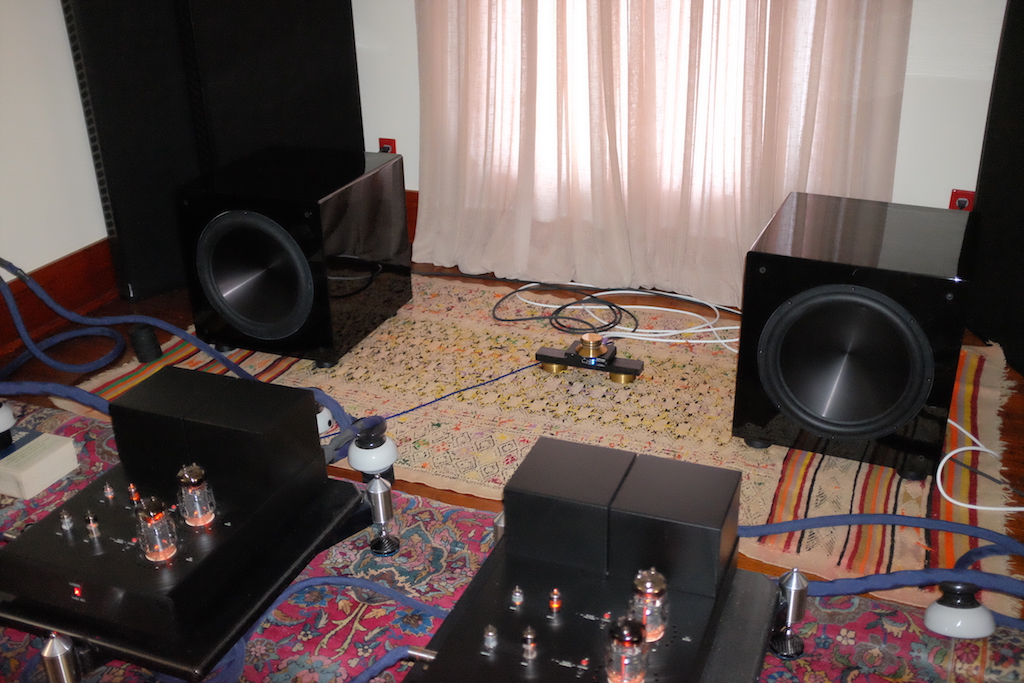
How hot is hot when moving from class a/b to to a or tubes?


I am considering moving from a class a/b Luxman L509x to a class a or tube amp. 
I have never owned a class a or tube amp, so have no experience of living with one. My kids are hopefully old enough and wise enough not to burn themselves, but I do live in an already warm house with bifold doors leading to a south facing garden. There is no escaping the sun, despite having uv treated glass. 
 
My room is roughly 9 meters by 12 open planed living space. Equipment is, Luxman L-509x integrated, Zu union 6 supreme, 99db sensitivity (this is why I am considering a lower powered tube I can barely turn the Luxman up) music is played roughly 6 hours a day, more on weekends  

who here has moved from class a/b and d to class a with or without tubes. What were the differences of things like:

warming up time 

additional heat to the home

Running in summer time 

additional cost to run

any considerations I should make before purchasing something. I will try in my home, but will need to free up funds 


mpoll1

@mpoll1  I have been running two 50 watt tube mono blocks.  See my virtual system to get an idea of the size.  To answer your questions.

Ready to play as soon as I turn them on.  No great warm up period required.  

After they have been running for a while, and at med loud load, the transformers are running at 110 degree Fahrenheit.  My room is 13 x 21.  After two hours of listen time the amps have raised the room temp by 3 - 5 degrees. 

The cost of running tubes vs SS  a few dollars per months.  My SS amps pull 3 amps on average and the tubes pull 6.  I doubt you will notice a difference on the electric bill.  

I had a Pass Labs XA25 amp and it was like 4 60 watt light bulbs on in a small space. You could put your hand on it but if it got any hotter it would burn.

I didn't like having that heat when it was summer. I swithced to SPL S1200 class A/B which runs cool and very happy about that


JH

Exposed tubes can present lethal voltage, extremely high heat (enough to burn) and should not be around small children or pets. Regular maintenance of these devices, if well made, can lead to lifetime ownership. 6336 tube running at 18 watts per side.

Your questions:

warming up time 

additional heat to the home

Running in summer time 

additional cost to run


are trivial. The way I look at it, your first stop is assessing the quality of the power coming in. Are you in a single family dwelling? You wiring from the city line to the meter, or however it is configured, is usually the city's, but they will check it and can pull the meter. You want a clean, well done layout to your service panel and from corrosion at the meter connections to funky wiring, bad grounds, corrosion or some "hot spot" on the panel, you should have it checked. Then look at how you are feeding the system- dedicated lines? That's a sort of minimum in my estimation. 

The cost of tubes is the tubes. Sourcing them is another matter. 

Additional cost to my electrical bill: have no idea. I'm in Texas, it gets to be 110F here in the summer; there are grid warnings, and I usually don't play the system then, just because the grid is less "stable" for lack of a better word. I installed a 10kva Iso Transformer for the system that outputs 4 gauge to a more local service panel, where 4 20 amp dedicated runs of 10 gauge are installed. It is normally a very quiet system. 

Warm up time- 45 minutes for the amps; 3 sides for the cartridge. 

I use to think my two mono tube amps ran hot. Recently completed a custom full Class A 50w solid state amp build with the help of a local tech.  It runs even hotter.

Hot is hot. We pay a small price and inconvenience for the sound - still think its worth it for the type of sound it yields. When it warms up faster, even better! :)