DIY subwoofer high pass filter after preamp


Hoping to get some sage advice from some of the brilliant members of this audio forum. I am interested in trying a subwoofer in my system. I am not really interested in ultra powerful bass, but I am quite curious to see if taking some of the low frequency work away from my monitor speakers can further enhance clarity. I am also interested in improving the soundstage and filling out the music more.

Details of my system are in my profile but the speakers are Dynaudio Heritage Special monitors. I do not like the idea of using the subwoofer DSP for high pass filtering and would like to implement the simplest, highest quality solution without breaking the bank. After doing a little research it seems one simple passive approach would be to run the sub in parallel via one set of preamp line out connectors and then use a simple high pass capacitor introduced between the second set of preamp line outs and my amplifier.

I was thinking I could have a go at doing this myself. The plan would be to buy a high quality capacitor and solder one end of it directly to a male RCA plug I would then solder the other end of the capacitor to a female RCA plug and shrink wrap and jacket the whole thing together. I would then just have a filter/adaptor at one end of my interconnect that would connect directly to either the amp or preamp.

A few questions:

1) Is this feasible or even a good idea? 

2) What value capacitor would I need for roughly 80 Hz filtering with a 37 kOhm, 220 pF input impedance on my Audionet Amp1 V2? My speakers are 4 ohm, but not across all frequencies. 

3) Would I need matched capacitors for each channel and to within what % of each other?

4) Can I solder the capacitor leads directly to the connectors in this way? Most capacitors look to have enough wire for this. 

5) Anything else I should consider with this plan.

Thanks in advance for input.


sfpeloton

If they see full range, doesn't that mean you give up some of the benefit in mid/high-end clarity from shifting the low end exclusively to the sub?

Your speakers start to cut off @42hz. There's a good quality mid-bass they produce. It's part of the design. There would be little, if any, increase in clarity by high passing to a higher level and cutting out perfectly good mid-bass that those speakers do so well! Let them breath.

1) Is this feasible or even a good idea? 

Yes, Richard Vandersteen employs this approach in his products. This not only enhances the clarity of small speakers but also reduces the load on the power amplifier.

 2) What value capacitor would I need for roughly 80 Hz filtering with a 37 kOhm, 220 pF input impedance on my Audionet Amp1 V2? My speakers are 4 ohm, but not across all frequencies. 

For an input impedance of 37 kΩ and a cutoff frequency (roll-off point) of 80 Hz, the required capacitance is 0.0538 μF. If a 0.05 μF capacitor is used, the cutoff frequency will shift to 86 Hz.

3) Would I need matched capacitors for each channel and to within what % of each other?

Theoretically, the higher the matching accuracy of the capacitors, the better; however, in practical applications, a 10% tolerance is usually sufficient.

4) Can I solder the capacitor leads directly to the connectors in this way? Most capacitors look to have enough wire for this. 

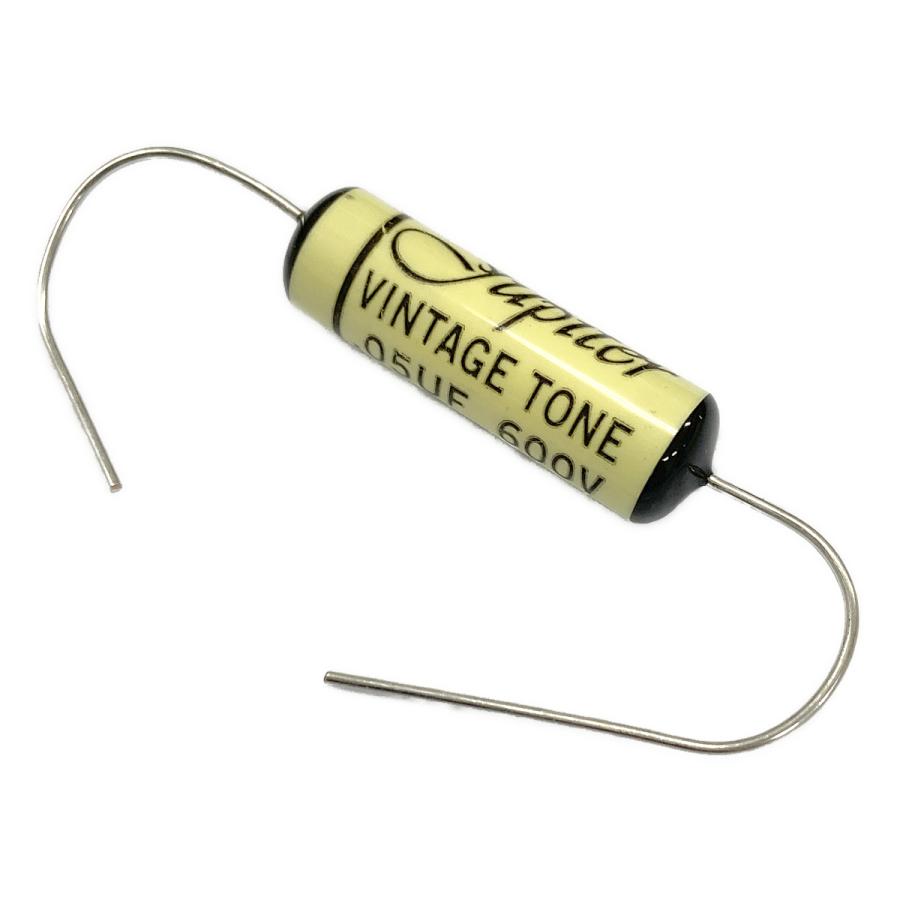
Yes. See the image below:

5) Anything else I should consider with this plan.

For optimal results, connect the outer layer of the capacitor to the preamplifier output to reduce electromagnetic interference (EMI).

Some manufacturers use a black or colored band, or print a line on the capacitor body, to indicate the outer foil lead. This mark is always located on the side of the lead connected to the outer foil.
 

I think you are getting advice from a limited set of people. There have been plenty of Audiophiles who have reported benefits of doing exactly what you are proposing. If you have two outputs from your preamp… Send one directly to the sub and send the other to your amplifier with the high pass filters in front of it. I say it’s worth giving a try and your approach is just fine. You can find the mathematics to size the capacitor easily online.

Okay, there were a few points that I am hearing. One of which is that using a speaker level high-pass into a sub (e.g. REL) might be the best way to connect it. The other is that the benefit from a high pass to the Dynaudios could be minimal. I will do a little more reading into subs that take a high level speaker signal.

Didn't see the last two posts in time. Sounds like the original approach might be worth a try at least. As with many things in this hobby, there are so many system and implementation dependent variables, that you don't really know the outcome until you listen. I did a little tinkering with AI and it seems like I could do it without a lot of effort. Given the common capacitor values, I could get a cutoff/rolloff of right around 77 Hz or 91 Hz depending on which one I select. 

This would be quite a different approach than what others proposed since it also can't be combined with the high level input on a REL.

