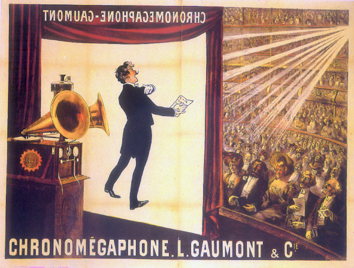
Did you also get some of the Gigantic Amplifiers that drove those theater speakers?
Theodore Case was my Grandfather (died young, I never met him)
"The Case Research Lab, located at the Cayuga Museum of History and Art in Auburn, New York, was the pioneering facility where Theodore Case invented the sound-on-film process in the early 1920s. Established in 1916 by Case and his father Willard, the lab was originally set up in a converted greenhouse on the family estate to study photoelectric materials, leading to the development of the Thalofide cell used by the U.S. Navy for infrared signaling.
Key developments and history include:
-
Sound-on-Film Innovation: Case began working on synchronizing audio with motion pictures in 1921, creating the AEO light and specialized cameras that made optical soundtracks viable.
-
Phonofilm Collaboration: From 1921 to 1925, the lab provided critical inventions to Lee de Forest for his Phonofilm system, though a partnership dispute led Case to sever ties in 1925.
-
Movietone System: In 1926, Case partnered with William Fox to form the Fox-Case Corporation, developing the Movietone system which revolutionized cinema with films like Sunrise and Gus Visser and His Singing Duck.
-
Museum Legacy: Case donated the lab and its archives to the Cayuga Museum in 1941; the site now features the original darkroom, chemistry lab, recording studio, and sound film testing equipment, and offers public tours. "
////////////////////////////////////
In the carriage house behind the Laboratory, where they filmed the test reels, all these years later, in the attic, I saw big Western Electric amps, wooden horns, a soundproof recording booth (got damn hot in there).
Some other equipment from that era
You might find something of interest here
https://en.wikipedia.org/wiki/Sound_film
Before that: