How important is low W & F performance anyway?


I recently completed work on a direct drive motor controller for a turntable mfr with IMHO, rather impressive results (0.004% 2 sigma method, 0.002% RMS).  In measuring other tables actual performance (vs published specs) I was shocked at the rave reviews two tables received that have rather lousy measured performance (but impressive specs).  It made me wonder whether the goal of ultra low W&F performance was really necessary?  I trust the measurements as they were verified by several methods and software tools and they correlated rather closely, yet the reviewers almost universally praise these tables.  It made me wonder if the reviewers even know what they are hearing or listening for and not to put to fine a point on it, does it even matter? 

phoenixengr

I agree with what's been said about listening to the LP/arm/cart as in the end, that is what we are doing.  But as an engineer working on a motor controller, my job was to make that contribution as small as possible.

Also agree that measuring it using an LP (and retail products) can give misleading results as Thigpen posited;  that's why I also chose to look at the encoders on these tables as it eliminated most of those issues.

This is the polar plot of DD1 with a 40Hz BW;  W&F is 0.16%, still much worse than their spec of 0.008%:
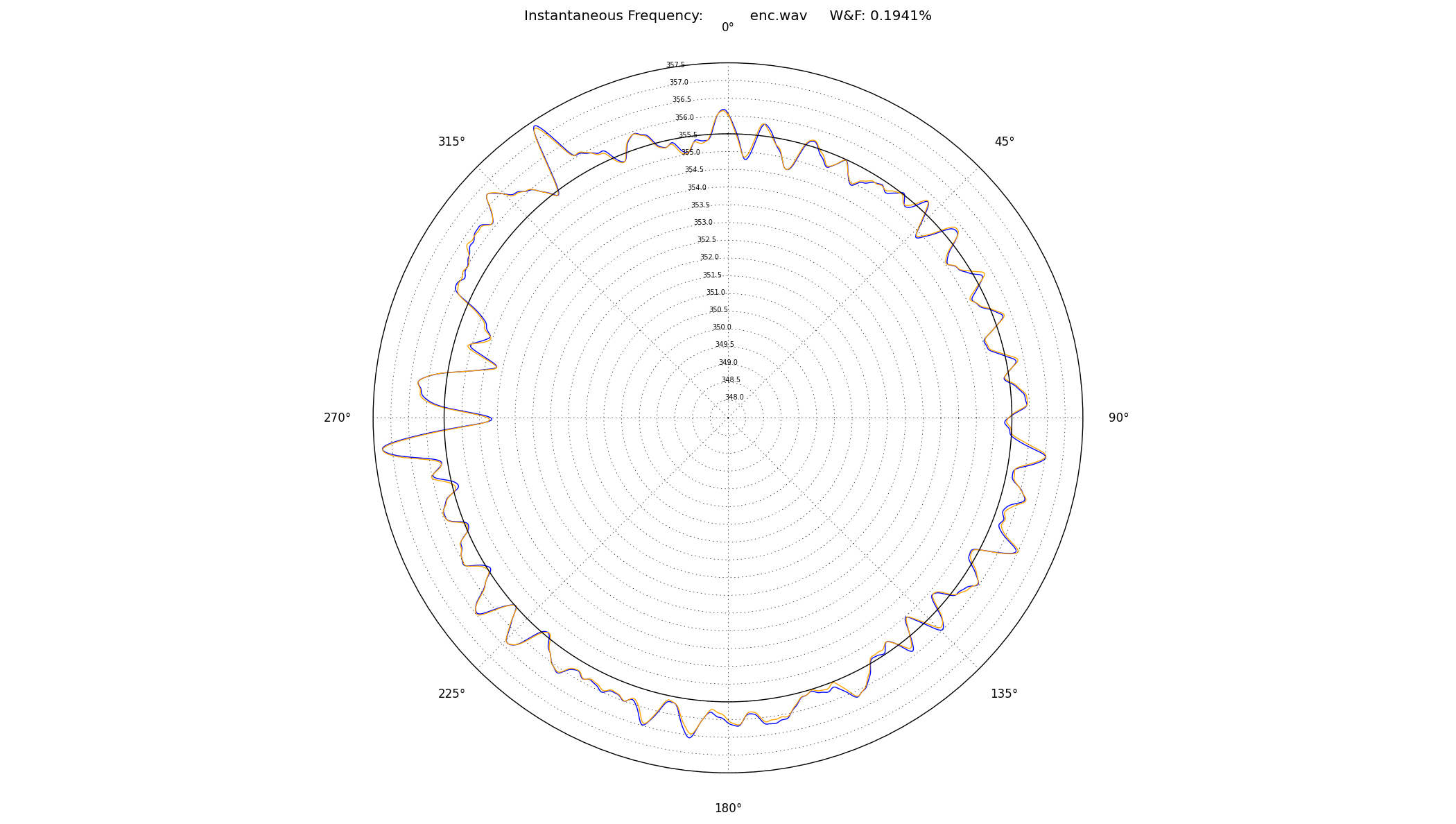
This is the same .wav file but with a 100Hz BW:


I

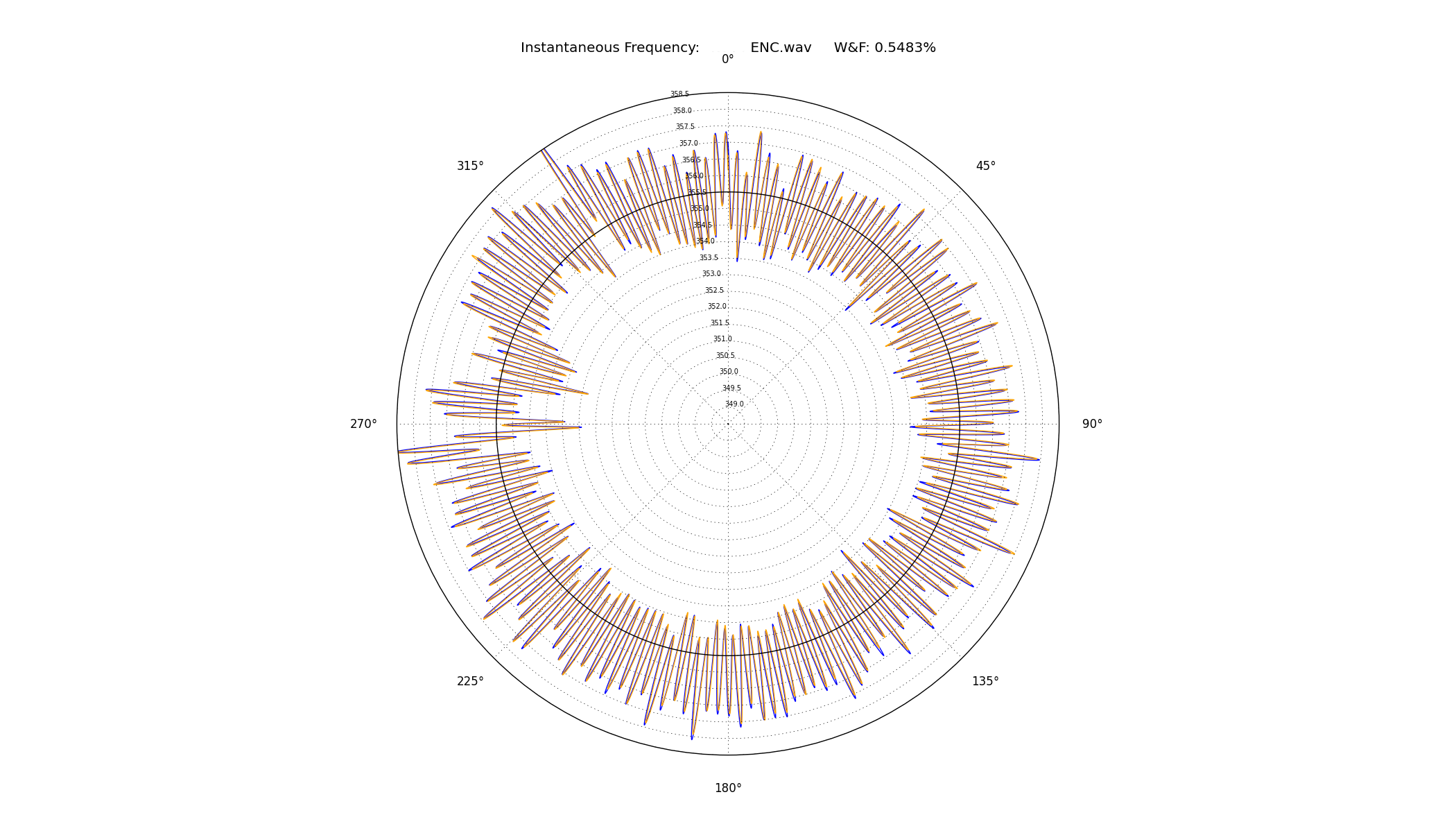
If you count the peaks there are exactly 20 from 0-45° or 225mS;  that yields a modulating signal at 88.88Hz or 160 pulses in 1.8S (360° or 1 rev).  This correlates with the 160 poles of the magnetic encoder they use.

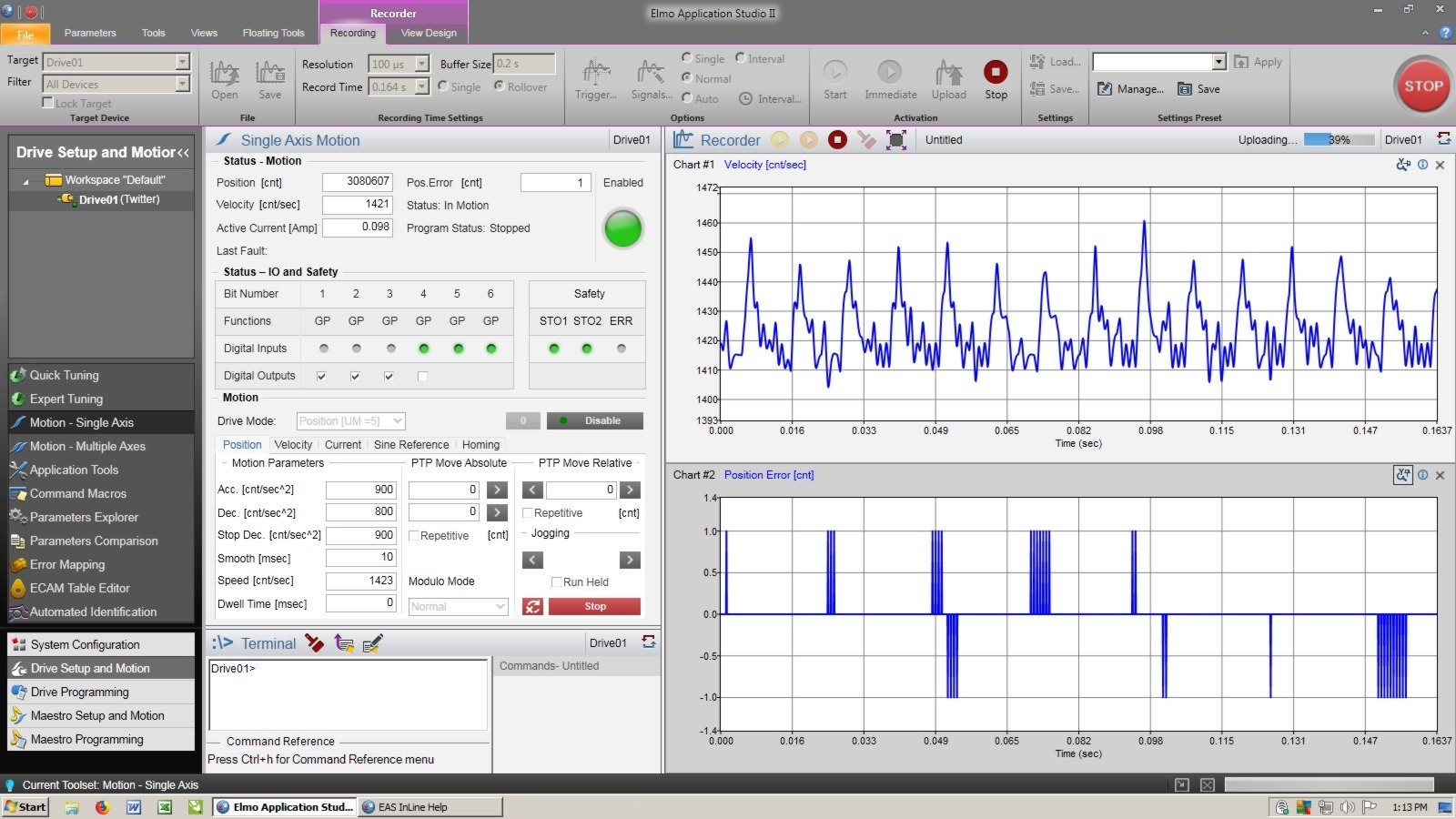
This is the readout of the development software used to program and tune the controller.  The upper right window shows speed error and there are ~13 peaks in 0.147 seconds corresponding to ~88.88Hz:


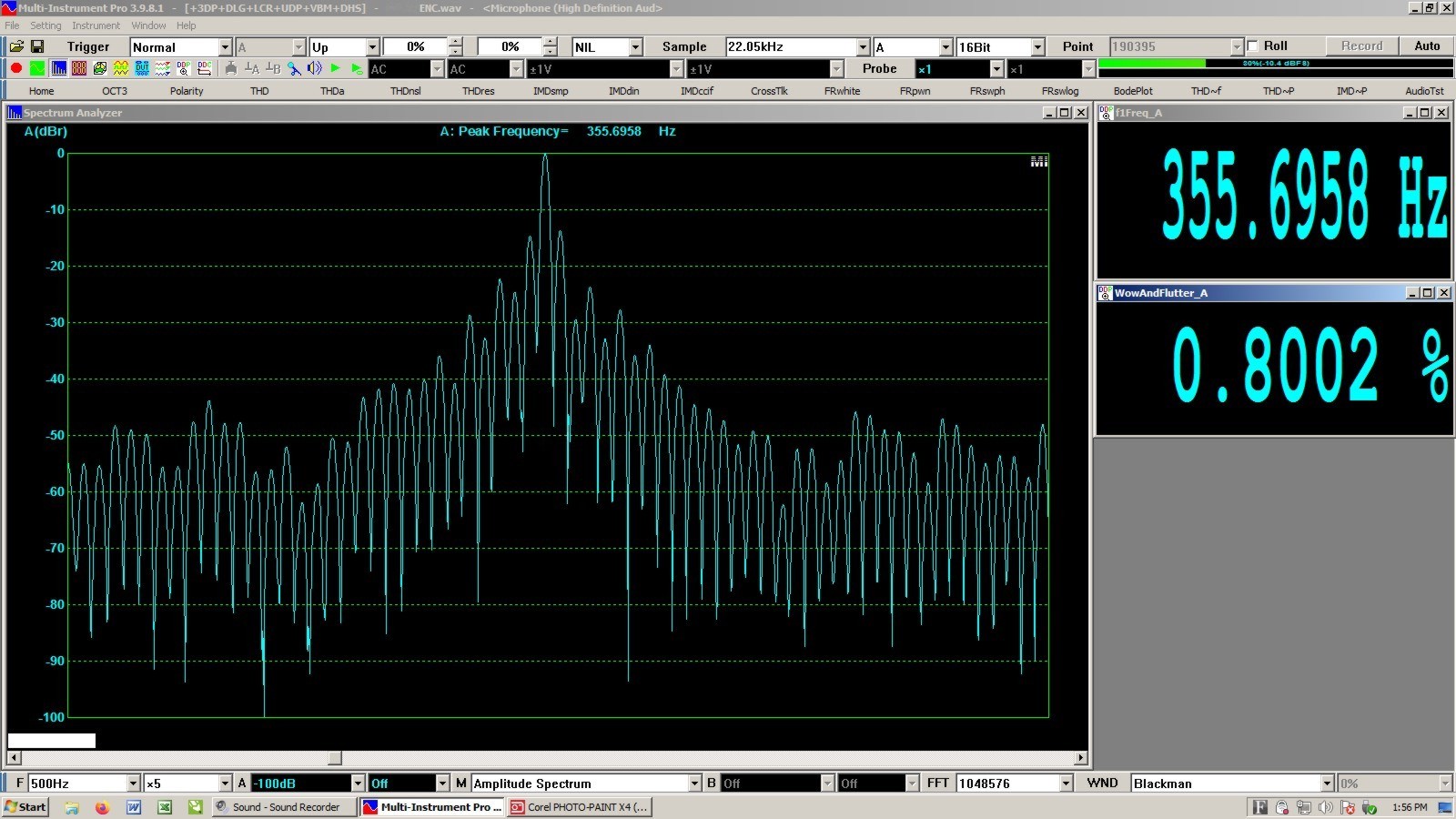
This is the readout of the same .wav file taken with Multi-Instrument software:


T


The reading is higher than the polar plot software, but I believe their BW is also 200Hz.

Thank you for taking the time to share these graphs along with your explanations of them.  I wish I knew how to do that so I could show AnalogMagik graphs too.  It really helps make your point.