

I bought 4 subwoofers and I'm absolutely not doing a DBA! Hah!


I just received shipments of 4 subwoofer drivers and they will not be going into a distributed bass array. 

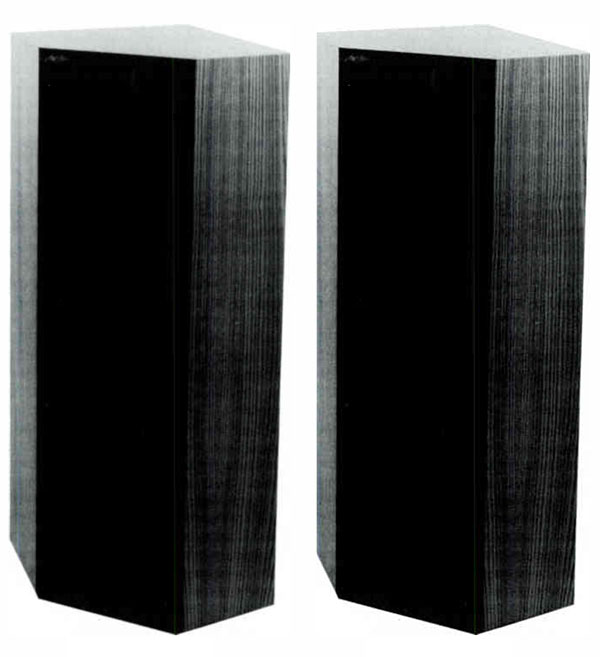
I'm replacing my left and right speaker stands with powering subwoofers with 2 subwoofer drivers each.  I call them powering because they will be powering the 2-way monitors that will sit on top.  Here's a beauty shot of the insides.

The amp has all the DSP power I could need to produce perfect speaker measurements.   I wonder if JA at Stereophile would wax poetically if I priced them high enough?? laugh

1744240613802.pngeriksquires · 2025-04-09 11:17 pm at 11:17 PM

erik_squires

@kevn wrote: "duke, may I ask about your sense of things, all things room and equipment equal, if you feel that a distributed bass array will still give better bass accuracy, depth and cohesion with mids and highs than what erik is working on? Or is there too little known in his particular implementation to say? Thanks much : )"

In my opinion a distributed multisub system offers superior in-room bass smoothness and accuracy, and that over a wider listening area, compared with two subs located underneath the main speakers.  Either can of course be equalized, and either can be used with bass trapping.  In general the more bass sources located in acoustically dissimilar locations, the greater the net in-room smoothness.

Bass extension in a given room depends largely on the characteristics of the individual subs.  If we’re talking roughly equal dollar amounts, a single large sub will usually go deeper than multiple smaller subs.

"Cohesion with mids and highs" is largely a system-integration issue, but @erik_squires’s approach of locating the subs beneath the main speakers allows him to use a higher crossover frequency and/or gentler crossover slopes than a distributed multisub system can get away with.   So Erik can cross over at 300 Hz if that turns out to give him the best results.

We are all constrained in some ways in what we can actually do, so we optimize within those constraints.  I’m quite confident @erik_squires has made fully informed choices to get the best results (acoustically and aesthetically) given his priorities and constraints. 

A few years ago at T.H.E. Show in Long Beach I showed a system which had subwoofers build into the speaker stands.  The woofer itself was angled at 45 degrees to reduce the force vector in the horizontal plane and thereby reduce rocking.  So despite my preference for a distributed multisub system when such is practical, I’ve also done something conceptually somewhat similar to what erik is doing. 

Duke
The floor to ceiling bass traps, and wall to wall traps

@erik_squires IME for traps to really be effective they have to be mobile as the bass energy changes frequency; IOW they are impractical.

I’ve watched audiophile friends of mine struggle with this issue for decades. When finally introduced to the use of the dreaded DBA they found the the bass traps far more effective.

But of course to really take advantage of this the main speakers either need to be able to handle full frequency bass energy or be crossed over at a lower frequency to prevent excursion on the drivers. IMO this is one of the failings of ’full range’ drivers, since crossovers seem to be almost religiously shunned by their designers and users alike.

IMO, you really don’t want to cross over a woofer much below 500 Hz if using a passive crossover. The caps required for the midrange drivers below that frequency tend to cause too much coloration. Some speaker designers try to get around this problem by not crossing over the midrange driver at all; instead placing it in a very small air tight situation to prevent excursion. IMO/IME this, in a word, sucks. It means amplifier power is being wasted as the voice coil of the midrange is being heated up by bass energy, makes for a more difficult load in the bass (increasing amplifier distortion) and also causes thermal compression.

Crossing over at a higher frequency solves this issue. But if the main speakers are going to 20Hz and the room has regular dimensions standing waves will be a problem. They are 95% of the reason a person would use room correction, but if the standing wave is causing cancellation, there’s nothing room correction can do about it since the amplifier power is being cancelled at the listening position. Even if you have 1000 Watts available you can’t solve a cancellation.

That is why the main speakers really should have woofers that radiate in different directions, particularly if no DBA is planned. That will reduce the tendency to generate standing waves in most rooms.

In my system I use a pair of subs (which I got from Duke) since my main speakers are flat to 20Hz. Without the subs I have severe bass cancellation at the listening position. One sub is directly to the left against the wall and the other is behind and slightly to the right. I have them facing the wall rather than the room so they can take maximum advantage of the room boundary effect in the manner as Duke designed them. 

Using a computer you could likely optimize the radiation pattern of the woofers to prevent standing waves and hopefully come up with something attractive at the same time. It may not take that much of an angle to allow the speakers to minimize standing waves, depending on the room.

Snell used to make a speaker called the model B. IMO it was superior to the model A. It employed a woofer firing at an angle towards the wall behind the speaker and was good to 22Hz according to Snell. In my old space these speakers worked extremely well but they were only 89dB. Easy load for a tube amp otherwise and easy for solid state too.

I have 4 of the RSS265HF-8 woofers sitting around doing nothing that I was going to sell. Now you have given me something to think about as I need to downsize as well. My bass array is taking up too much space since not only does it include 4 woofers, but 2 dedicated bass amps, and an active crossover.

@audiokinesis I recall hearing that system in Long Beach and liked the concept. I might like to try something like that. If you don't mind sharing, what were the dimensions of the cabinet that was used in the set-up?

@erik_squires 

Are your cabinets partitioned horizontally so that each driver has its own sealed enclosure? It’s hard to tell from the drawing you posted.

Also, what is the rationale for the recessed amp housing compartment and wouldn’t it be preferable, generally speaking, to leave the inside back panel of the enclosure flat? That could be done simply by knocking out the amp housing, which would also provide opportunities to implement better ventilation for your amps, which will need a lot of it 🙂

Just interested in your thought process. Thanks!