
 http://scaena.com/speakers.html
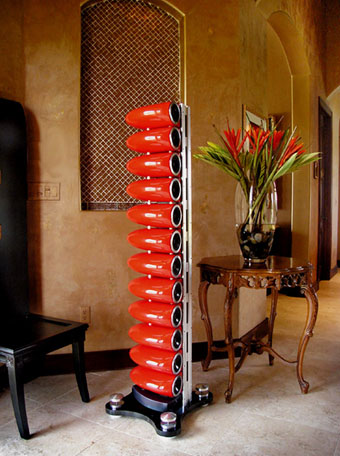
I notice no boxy coloration with each driver enclosed in special ceramic compound. Thomas

Are exotic speaker cabinet materials overrated?
Seems a lot of speaker companies are coming out with new non resonant cabinet materials all the time. Wilson especially seems to be inventing a new M X V material every year. Other top speaker companies seem to be staying with MDF even when their speakers match the above mentioned speaker company prices. Do these exotic materials really contribute to a better sound or do they add an unnatural quality to the sound.
I notice no boxy coloration with each driver enclosed in special ceramic compound. Thomas |
Manufactures have been switching to lighter, thinner enclosure materials which makes lots of sense when they include the costs to ship their speakers to vendors or drop ship them to customers. They've taken advances copied from the British to make enclosure resonances consonant with those generate buy the drivers while they're reproducing music. The British took this approach because the BBC needed monitors to be light weight and mobile for onsite field applications. Realistically in the home environment enclosure resonances aren't as important or obvious under most circumstances as listeners want to believe. Instead, engineers design them with heavier and more ridged materials or radiuses where they're needed, lightweight braces in strategic locations and in addition specifically placed damping materials along encloser walls (bitumen or tar) where they've detected uncontrolled resonances during the development phase. |
@hiendmmoe I don't know about ALL their speakers, but Focal Stella Utopia EM Evos are made from MDF with laminated outer finishes per The Absolute Sound review. I think you'll find that's the most common with nearly all mass-produced speaker brands. MDF and HDF are just so much easier to work with and produces some of the best measuring enclosures there are. Before Klippel scanners and accelerometer software, designers just kinda "overbuilt" cabinets. (Think of bridges or older buildings. Yes, you can build a speaker out of Bubinga but you don't need to.) With the advent of better manufacturing tools and testing software (i.e. not needing to invest in an anechoic chamber), manufacturers can test for unwanted resonance in any material. Also worth mentioning is probably over 90% of speakers are built to a price point and include compromises. Cabinet material that never sees the light of day is one of those compromises. |
@nondemo prety sure they're HDF but they're not 1/4" thick like cheap speakers. |