

@carlos269 I do not have a video recorder other than my cell phone, so I donʻt have the ability to do a video recording of a chamber music performance. I would assume that the engineer who records the Voices of Music performances uses the same mikes for both his video and audio recording systems. I have no experience in video recording of live music, so I have no idea how itʻs all engineered.
Iʻve never thought of recording my home system. Not sure what the point of that is.
I did my first location recordings back in the 1970s. I had no idea what I was doing and it was all on a budget anyway. I still have those recordings today. Hereʻs one done at the Four Winds Cafe in Yellow Springs, Ohio, of a jazz quartet. It was trumpet, alto saxophone, bass and drums. Good players doing bebop. I had the mikes on either side of the room, pointed at the band. The bass player had a small amp, but the rest of the band was all acoustic. I was using Shure SM57 PA mikes into my old Revox A77 open reel deck. Not an audiophile recording, but it did capture the energy and emotion of the event anyway and is still enjoyable to listen to.
https://russbutton.com/recordings/Kirkpatrick/Scrapple_From_The_Apple.wav
The best reference is live music
For those of you who love classical music and care about imaging in your audio system, I recommend that you check out a San Francisco area group called Voices of Music.
They video record all of their performances and have most all of it on YouTube and free to access. They are extremely well engineered recordings and more than worthy for the very finest audio systems. What makes these recordings especially *useful*, as well as enjoyable, is that being video, you can see where all of the musicians are. The best reference in audio is live performance. Does your system do an honest job of recreating the live performance? Does your system give an image that at all matches what you see on the video?
Beyond this issue, Voices of Music is worthy to experience because they are very different from the large symphonic performances that most classical listeners hear. Instead of the SF Symphony with 100 musicians, Voices of Music will typically have about 8 to 12 players. There are some larger ensembles and some smaller.
They are an "early music" ensemble. Just as rock 'n roll evolved from the early 1950's to what we have today, what we call classical music evolved as well. The instruments evolved too. A 19th century violin (what the musicians call "modern") has a neck pulled back, has steel strings and is engineered to be louder than an 18th or 17th century violin, which has a straighter neck and gut strings. They are in fact, different instruments.
An 18th century instrument will articulate better. The bow is lighter and faster than a 19th century bow. Trumpets of that period had no valves. Neither did French horns. Flutes were typically wooden and had open holes. That period also had instruments completely absent from "modern" orchestras. If you haven't listened to a 1st rate early music ensemble, you're in for a totally new experience.
- ...
- 48 posts total
@russbutton You stated “Iʻve never thought of recording my home system. Not sure what the point of that is.” One records one’s home audio system for all those very same reasons that you record your wife and all the other ensembles performing. Like a good pool player, I’m laying out a line of thoughts to eventually prove a point. It seems like you are happy sharing your recordings. You don’t appear to have no real desire to showcase and share what you have accomplished with your sound reproduction system at home and that is perfectly fine. Some of us do use audio recordings of our home systems to overcome geographical limitations. If you are not already familiar, I would recommend Gearspace Forum as a good place to discuss and chat with other recording professionals and amateurs with similar interests. |
@carlos269 Thank you for the pointer to Gearspace. Looks like fun. |
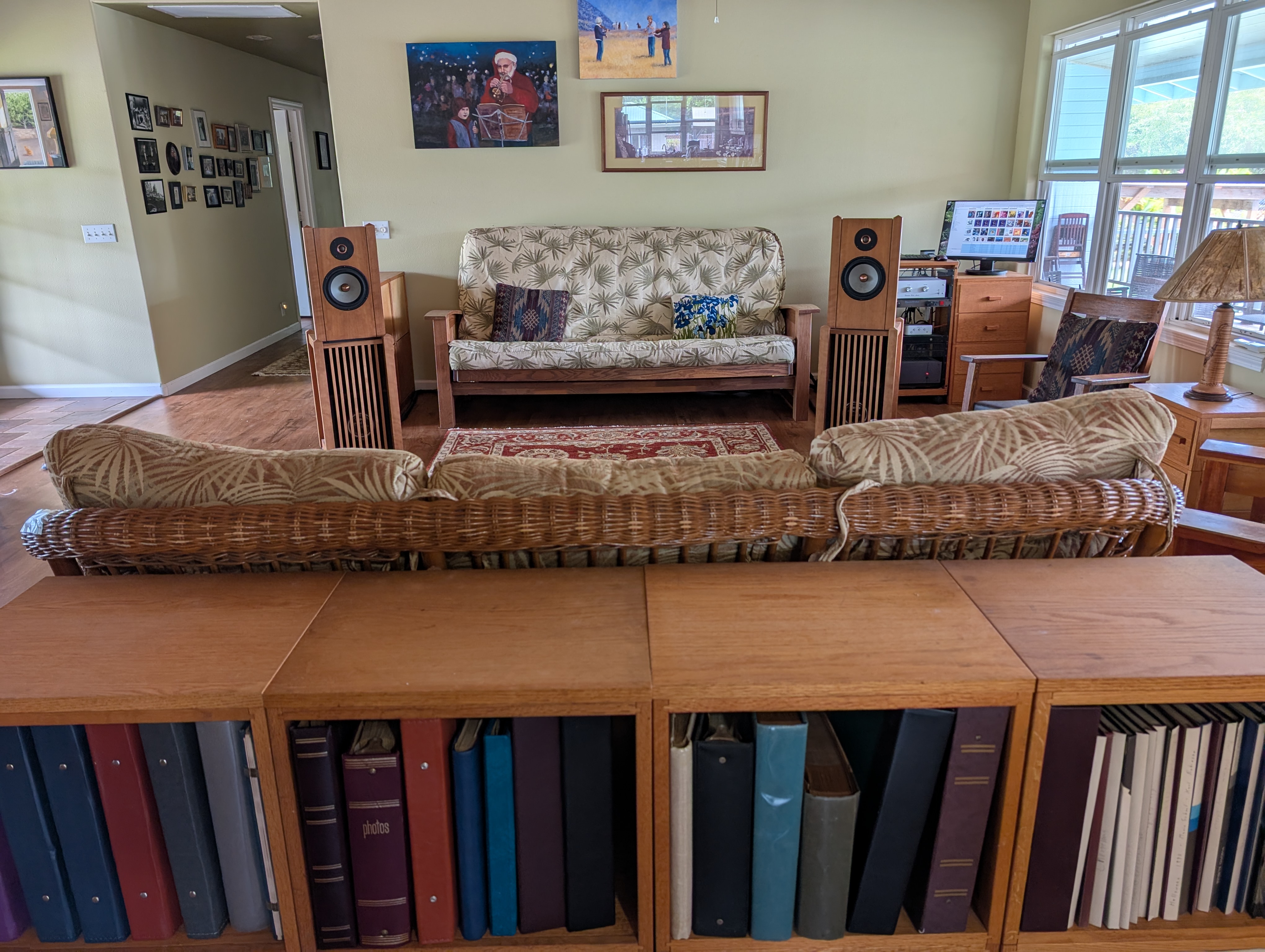
@russbutton Thank you for sharing a picture of your system. I second what @devinplombier said, your Linkwitz Orion speakers look great and are aesthetically appealing. Although I have three different turntable systems here at home, I also almost exclusively am all digital these days. I stream both from my local library and from Tidal played back with HQPLAYER, controlled with the JPLAY iOS app. How do your audio recordings sound played back on your systems, through the Linkwitz Orions? Is the sound you hear when playing back the recordings you made of your wife and the other ensembles representative of the sound you heard at location during the recording sessions? |
- 48 posts total