hertzhead,
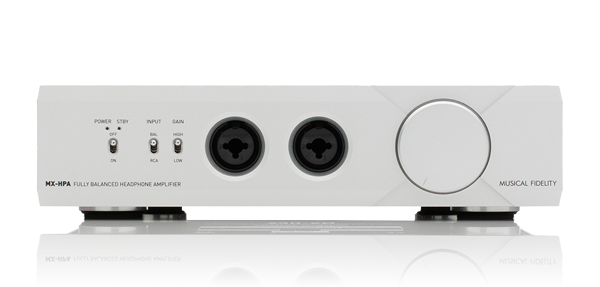
I know you have been getting some conflicting information on all of this, so I'll try to clarify it for you. Cleeds went out of his way to throw insults, but not you so I'll try to help. The information in my post is correct. If you read my 2nd post to cleeds, I show you how to fact check me so you don't have to take my, or anyone else's word for it. When MF makes the claim that you amp is fully balanced from input to output, they mean it in the same way a regular, full size integrated amp would have it. Its the same thing. Its a preamp and a power amp in one box. The only difference is the power amp section is much smaller because headphones don't need as much power. In general, there's 2 ways a component can be balanced. One way is to convert the signal from single ended to balanced at the inputs and outputs. With this method, the signal is only balanced when its going through the cables. Its very cost effective to go this route. It helps with noise and it lets you run longer cables. A fully balanced component is when double up on everything in the signal path, and keep the signal balanced as its going through the component itself. For your situation, and what we are talking about here, it doesn't matter which way its done. When MF is claiming to be fully balanced from input to end, they mean fully balanced at signal level. Everything in the preamp will be fully balanced but only the input section of the power amp will be balanced, not all the way to the speaker/headphone outputs. And this is no different for any fully balanced power amp, full size or headphone. As I stated in my first post, manufacturers are reluctant to admit that they are bridging the power amp. They label the output balanced because the signal needed to be balanced to bridge the amp. And yes, you are going from a 3 conductor headphone cable to a 4 conductor headphone cable. When most people see that, they just assume its balanced. Fully balanced power amps and single ended power amps, both use 2 conductor speaker cables. It makes no difference.
What I'm telling you in my posts is not well known. Pretty much every person who reads them will say I'm wrong. I can't help that and I know it makes things confusing for you. If you can get the schematics for your headphone amp, or another "balanced" headphone amp, I can walk you through it and prove what I'm saying is true. But that's the best I can do. If it makes any difference, I've confronted several manufacturers on this, and every one of them reluctantly admitted I was right.