Room treatments and acoustics…. How to begin?


Hello,


I have spent the past year and a half going to town. I have mindfully and exuberantly engaged with every aspect of my system, with one exception… acoustics and room treatments. 
 

I have a 14’x18’ x8’ high living room that is also my current listening room. I live in New York City, queens, and am an architectural designer with some fabrication ability. I am just beginning to get privy to how to approach acoustics and room treatments and find it fascinating. I would very much like to do the following:


-maximize the room acoustics in my living room, while maintaining or enhancing its visual appeal


-begin learning about acoustics as a whole, so that I may lean into designing architectural spaces intertwined with hifi listening..,, ie: large volume chamber woofers and open baffles incorporated into the architecture, even speakers partially or entirely cast into the floor walls or ceiling. 
 

how to begin? 

thanks for your insight and inspirations, fellow obsessives…!


whyrichard

FYI, good video on this: https://www.youtube.com/watch?v=ParmEmXq05U

AI Summary: The video emphasizes that the room's acoustic makeup (1:05) is the single most important component in a hi-fi playback chain, even more so than loudspeakers, amplifiers, or DACs. The speaker admits that he previously thought a better DAC would transform his system, but he was proven wrong (0:21).

Here's the speaker's hierarchy of hi-fi optimization in order of audible impact:

  1.     Room's Acoustic Makeup (1:41)
  2.     Loudspeakers and their Placement (1:45)
  3.     Listening Position (1:52)
  4.     Subwoofer Integration (1:59)
  5.     Application of Room Correction Software (2:02) (generally below 300 hertz)
  6.     Amplifier (2:08)
  7.     DAC (2:12)
  8.     Chosen Playback Format (2:15)

The video details how different room problems, like bass resonances and reverberation, affect sound quality (3:15). It highlights that while full acoustic treatment is ideal, simple adjustments like loudspeaker placement (5:24) and listening position (6:24) can make a significant difference. The speaker also discusses the benefits of adding subwoofers (6:50) for improved bass and overall sound. He states that amplifier and DAC differences become less impactful once the room is treated and other components are optimized (9:14, 10:04).

The speaker also criticizes the "format supremacy" debates (11:58), arguing that these differences are often masked by untreated rooms. He stresses that furniture alone is not a substitute for proper acoustic panels (13:14). Ultimately, he concludes that without proper room acoustics, listeners will never hear the true capabilities of their hi-fi components (18:27), unless they are using headphones, which bypass room acoustics (16:45).
 

You’ve gotten some great advice here.  I’ll just add that my audio mentor was a big proponent of Roomtunes, triangular tunes in the corners and rectangular tunes along the longer walls.  I’m talking about the junction of the walls and the ceiling.  My listening room has beam ceilings and a lot of bookshelves, and my old Roomtunes are enough to make the room a pleasant listening environment  Unfortunately, I don’t think Michael Green’s RoomTunes are available anymore, but some cheap throw pillows in the upper corners of a room can go a long way.  Just my two cents!

@dogearedaudio 

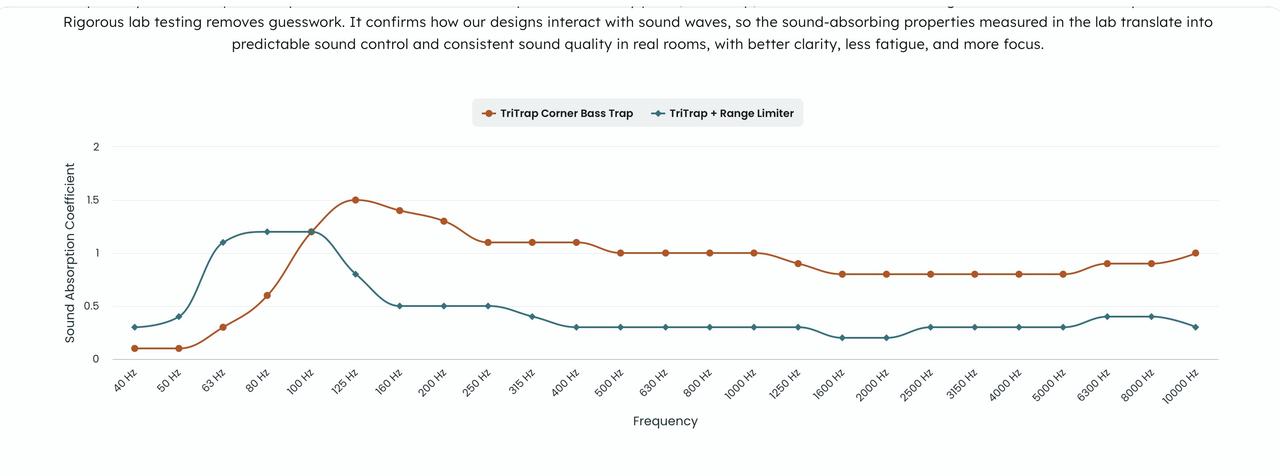
Size matters when it comes to bass trapping. I find it difficult to believe that a couple of throw pillows in the tricorners can make an impact. Even purpose-built traps which are significantly larger and designed for that purpose are of limited efficacy below 100 Hz unless you opt for the limited bandwidth version. The picture below shows the performance of the GIK TriTrap, dimensions and construction of which are much different from a throw pillow. 


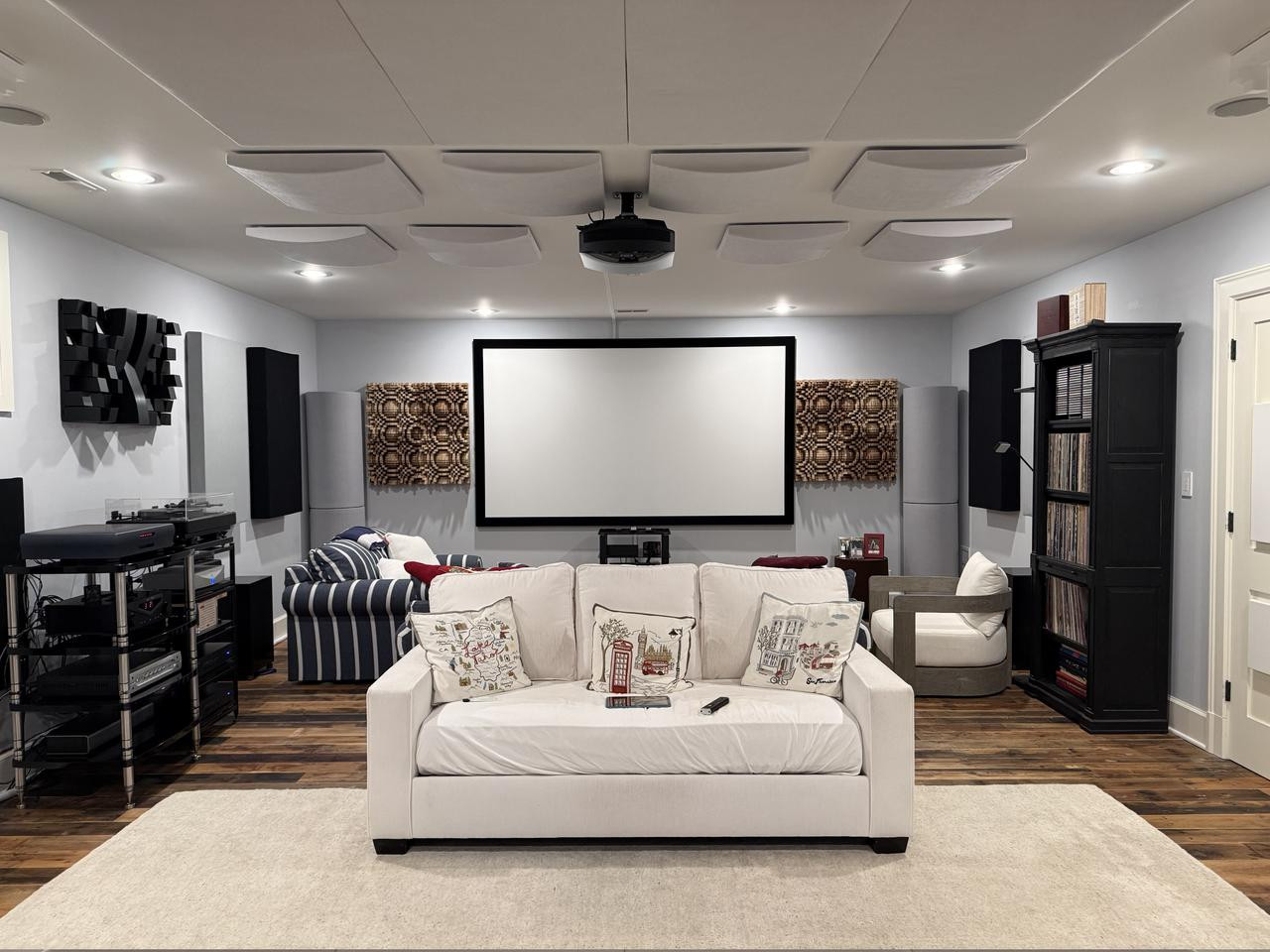
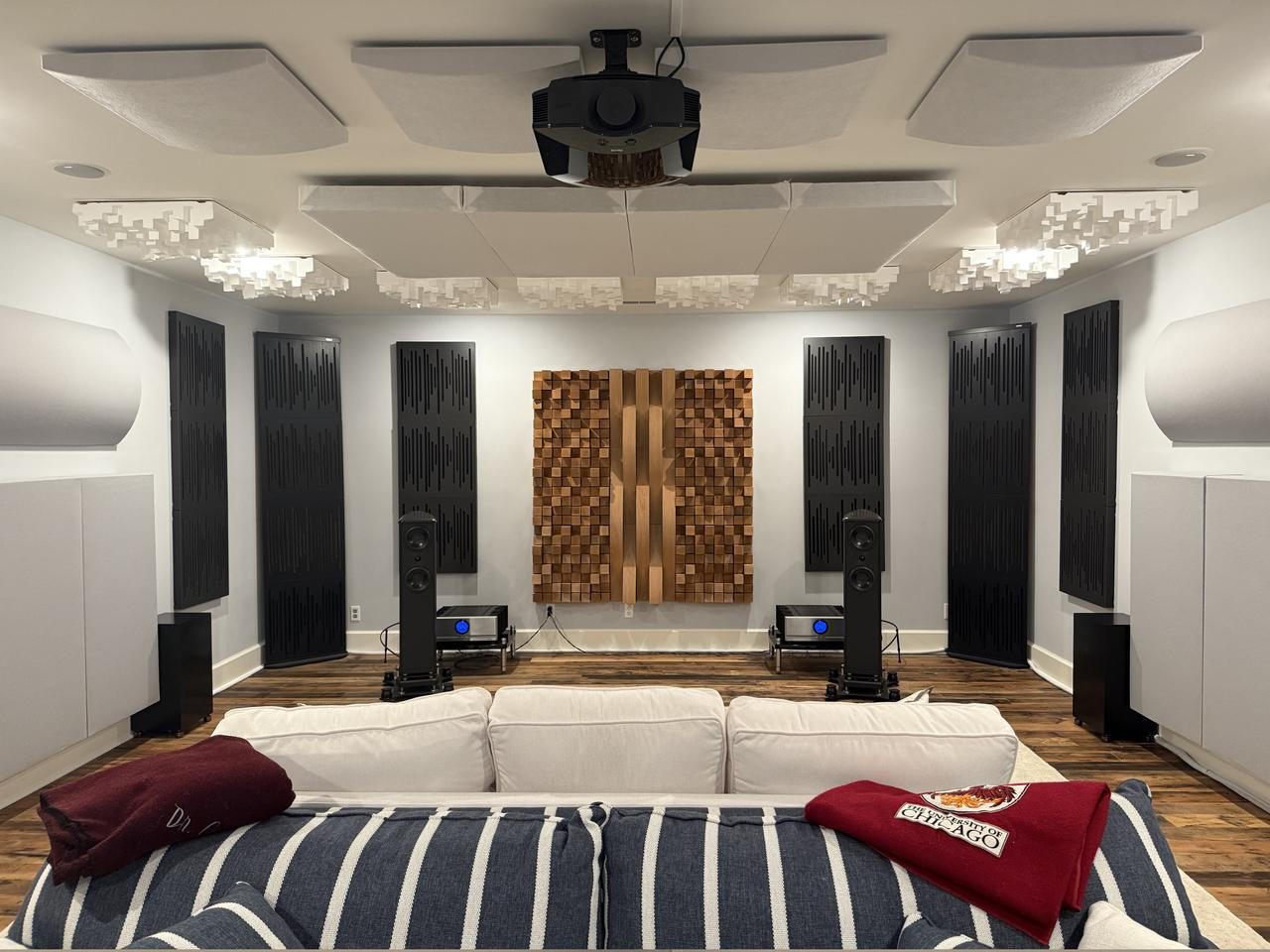
I employ Vicoustics bass traps in the front and GIK traps in the back of the room.

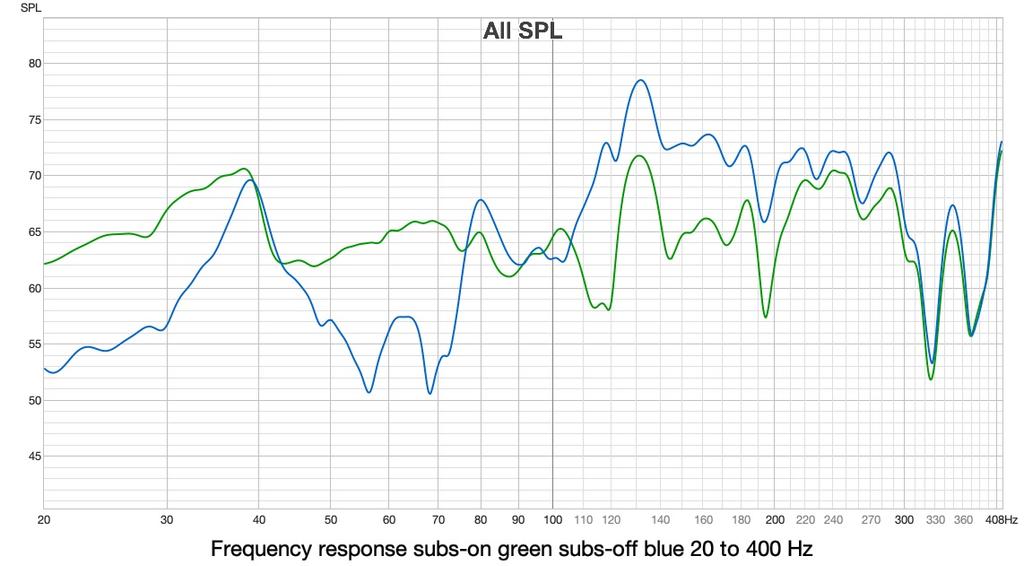
Many would say this is appropriate and adequate treatment, but it really only begins to treat the issues. The curves below show the effects of room treatment alone (blue) versus multiple subwoofers and room treatment (green) in terms of both frequency extension but perhaps more importantly, in terms of a smoother frequency response with less dramatic peaks and nulls.

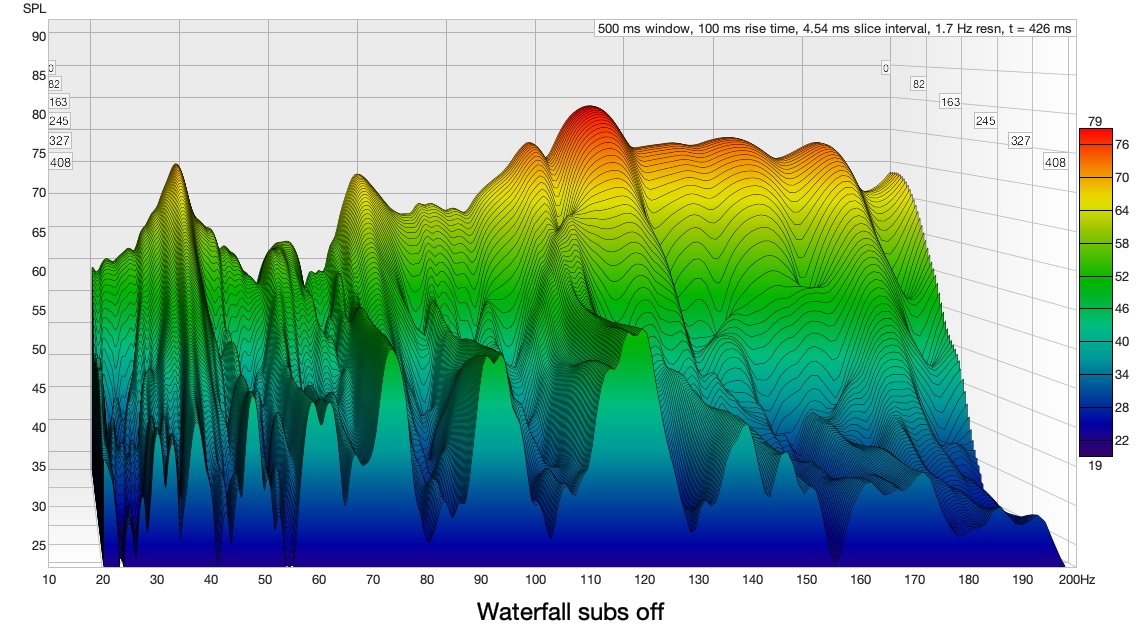
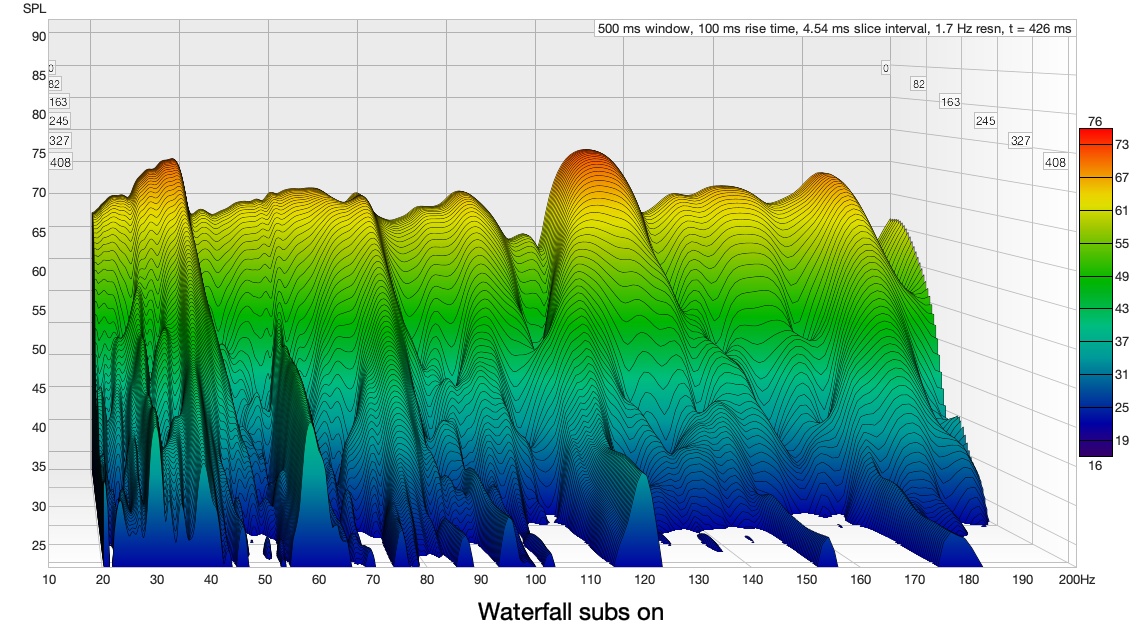
In my opinion, it is not the frequency extension that is the main benefit of multiple subs because one can go low with just one sub. It is the smoother response and diminished modal aberrations (ringing) that are most important as demonstrated by the waterfalls below.

Throwing a couple of small subs in your room will have a much greater benefit than a couple of pillows. I appreciate there is a significant dollar difference, but it is money better spent than on new amplification, source, or possibly even speakers. In terms of WAF, discreet sub placement may be less likely to attract attention than pillows in the upper corners of the room.


@tcutter 

No, it's not a fix for low frequency issues, and I didn't mean to suggest it was.  It's a relatively cheap and simple fix for a too-lively room, especially if the room already has some natural difffusing elements like bookshelves, furniture and carpets.  It can improve focus and imaging.  It's a good place to start if you're on a budget.