Are exotic speaker cabinet materials overrated?


Seems a lot of speaker companies are coming out with new non resonant cabinet materials all the time. Wilson especially seems to be inventing a new M X V material every year. Other top speaker companies seem to be staying with MDF even when their speakers match the above mentioned speaker company prices. Do these exotic materials really contribute to a better sound or do they add an unnatural quality to the sound. 


hiendmmoe

Speaker manufacturers go to great lengths to measure resonance with laser interferometors and very sophisticated doppler instruments.  Then reviewers give the box the knuckle rap test.  Go figure.  Some of the most solid materials like aluminum in a Magico speaker are very heavy and difficult to bring into a typical home and move around to find a good sweet spot balance.  An interesting tidbit on the Yamaha NS-5000 speakers made with Hokkaido Birch is that when they sent the wood to Malaysia where they are made in the same factory that makes pianos, the wood warped.  They had to fix that production issue, which they did. I found that on the forest product company's website after a very deep google dive. The piano black lacquer finish also helps controls the resonance.  Whether the wood serves the same function in the speaker as it does in a piano or wood musical instrument that Yamaha makes is unclear.  In the end, the final sound is tuned by ear and there are numerous things that affect that outcome obviously.

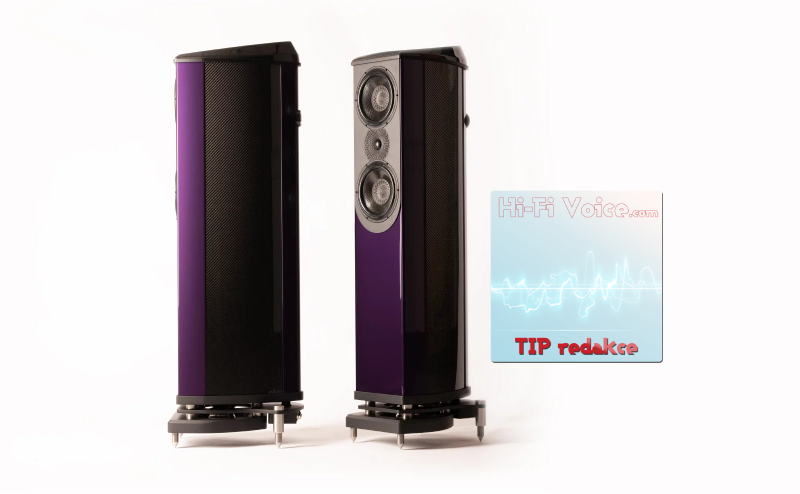
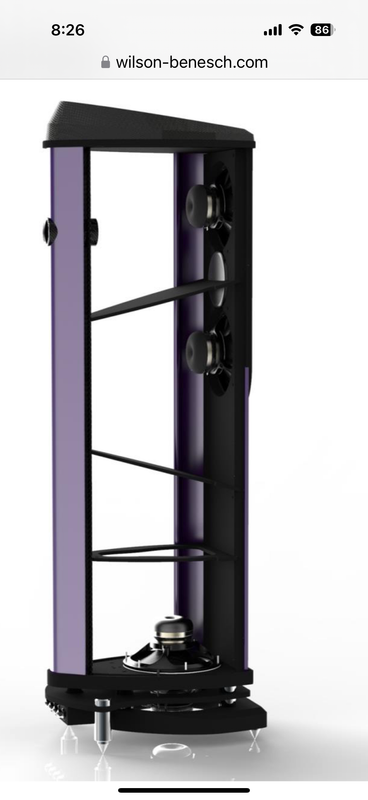
Wilson Benesch achieves a stiff structure through a woven composite material.

They used to use carbon fiber but have evolved to a biocomposite. Stiff and strong

without all the internal bracing, weight and size. McLaren-esque


No, they are not overrated. While there are a few (very few) speaker manufacturers that incorporate cabinet resonance into their speaker design, setting those aside, the difference in sound quality between a speaker with cabinet resonances and an otherwise inert cabinet is huge. Rockport Technologies, Acora, and Kaiser are all examples of this, each using unique materials for their cabinets.

My own Cabinet Design, if adopted, will be something in relation to what Kaiser produce as a Cabinet. 

My material of choice for the structure of the Speaker Cabinet, is the same as Kaiser is using. Even though Kaiser have relabeled it with the name Tank Wood.

The owner of Kaiser has a lifelong Career working with sound, of which a large proportion has been in R&D, funded by Industry with substantial funding. 

Stereophile’s accelerometer tests are quite telling concerning this topic. 

They have measured conventional MDF boxes like the Spendor A7 and Philharmonic BMR monitor that produce barely any resonance. Conversely, some of the special material Wilsons are shown to have at least one high amplitude resonance. 

Based on my subjective experience, I believe a well-braced MDF cabinet, with sufficient wall thickness, is good enough for controlling any otherwise audible resonances. Often times, a speaker’s port resonance will be more audible than any of its cabinet vibrations. A good example is the Q Acoustics concept 50–barely any measured cabinet resonance, but it does have a port resonance at ≈160Hz that I found was surprisingly audible and distracting in my listening. 

It seems like the well-braced aluminum cabinets from the likes of YG and Magico are the most consistently inert in Stereophile’s tests.